Skip to content
Prices and currency for

+91 22 4450 4536 WhatsApp us India IST

Hiring

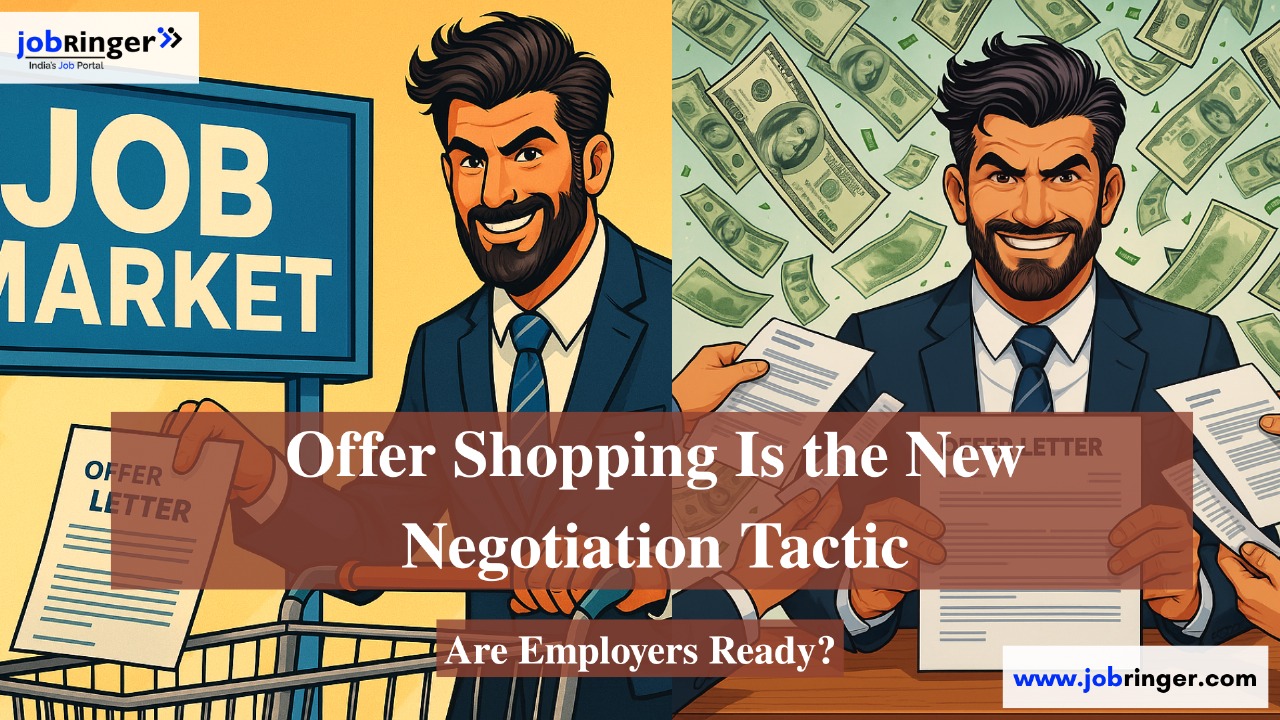
Offer Shopping Is the New Negotiation Tactic - Are Employers Ready?

· 4 min read

The recruitment landscape is evolving rapidly. With advancements in technology, shifts in job expectations, and rising unemployment in some sectors, both job seekers and employers are adapting to new trends. One such trend gaining attention is “offer shopping,” a growing practice among professionals, especially in niche roles, such as data scientists, cybersecurity experts, AI engineers, and product managers, where candidates apply to multiple jobs and use competing offers to negotiate better pay, perks, or positions.

What is offer shopping?

Offer shopping refers to the practice where candidates, particularly in high-demand roles like data scientists, cybersecurity experts, AI engineers, and product managers, apply to multiple companies at once. They use job offers not just as opportunities, but as leverage to negotiate higher compensation, improved work conditions, or faster career growth.

What is the reason for the rise of offer shopping?

Candidates today are more confident about asking for better salaries and growth opportunities. With inflation rising and the cost of living increasing, professionals now expect higher compensation for their work. The rise of remote work and global job access has also made it easier for them to compare offers across different regions and negotiate better deals. Online platforms like Glassdoor and Levels.fyi help job seekers understand their true market value — what they should be earning and how their skills are valued in the industry. This transparency has made candidates more informed and selective. At the same time, there are noticeable gaps in the job market. Many companies struggle to find the right talent, and sometimes, they offer packages that don't match the candidate’s expectations. This mismatch is one of the main reasons why offer shopping is becoming more common in the recruitment industry.

How Candidates Are Using It as a Tactic

Job seekers today are strategically using multiple job offers as negotiation leverage. During interviews or offer discussions, many candidates openly mention other offers they’ve received to negotiate for higher pay, better job titles, or improved work conditions. But it's not just about money. Today’s professionals are also holding employers accountable for the overall quality of the role, seeking clarity on responsibilities, opportunities for growth, work-life balance, and workplace flexibility. They want to know where the role leads, not just where it starts. In many cases, candidates intentionally delay accepting offers, using the extra time to compare benefits, receive counteroffers, or wait for a more suitable opportunity. This behavior reflects a shift in mindset: job seekers are no longer settling; they are choosing deliberately, based on long-term value, not urgency. For employers, this means that the hiring process is no longer just about making an offer; it’s about making a compelling case for why a candidate should say yes.


Impact on Employers

Recruiters today are facing a growing challenge: more candidates are dropping out after receiving job offers. In a highly competitive market, even candidates who initially say "yes" may change their minds if they receive a better offer elsewhere — whether it's a higher salary, a more flexible role, or faster growth opportunities.

This trend is making the recruitment process more difficult and time-consuming. HR teams are spending more time renegotiating offers, restarting interviews, and going back to the talent pool to find new candidates. It increases the cost of hiring, delays onboarding, and often leaves teams understaffed for longer periods.

In many cases, the issue isn't just the offer itself — it's also the speed and experience of the hiring process. Candidates who feel uncertain or undervalued during interviews are more likely to continue exploring other options, even after accepting an offer. This makes it more important than ever for employers to create a positive and engaging candidate experience from the very beginning.

What employers can do to decrease this offer shopping

Employers can reduce the chances of offer shopping by speeding up their hiring process. Instead of delaying responses, they should make decisions quickly to stay ahead of the competition. Recruiters should also focus on transparency, clearly communicating the job role, expectations, and growth opportunities. Building trust through open communication and realistic promises goes a long way in keeping candidates engaged. Offering benchmark salaries is equally important. Lowballing candidates often leads to rejections or dropouts. Competitive compensation helps in attracting and retaining top talent. In addition, recruiters should prioritize the candidate experience. A strong employer brand and a smooth, respectful interview process can make a lasting impression and influence a candidate’s final decision. It’s important to pre-close candidates — before sending the offer, recruiters should confirm the candidate’s genuine interest and check if they are considering other opportunities. This proactive step can help avoid last-minute surprises.

To tackle the problem of offer shopping, employers need to adopt a more strategic and candidate-focused approach. Speeding up the hiring process is crucial, as delays often allow candidates to accept better offers elsewhere. Offering competitive, market-aligned salaries also plays a key role in attracting and retaining top talent, especially in niche roles. Transparency about the role, responsibilities, and growth opportunities helps build trust and keeps candidates engaged. A positive candidate experience, from the first interaction to the final offer, can strongly influence a candidate’s decision. Finally, recruiters should pre-close candidates by confirming their genuine interest and checking if they are considering other offers before extending a formal one. These proactive steps can significantly reduce offer dropouts and help employers secure the right talent in today’s competitive job market.

HINDCO Insights

Practical writing on hiring and careers, once a month

No spam, and you can unsubscribe in one click.

I am